Home / Capability / Manufacturing Processes

Manufacturing Processes

To support the production of different industrial ceramic components, Minghao continues to expand its forming, sintering and finishing capabilities. Our main equipment includes more than 50 hot pressing machines, over 20 dry pressing machines, two natural gas kilns, eight CNC machines and more than 10 surface grinders.

01 Material & Process Planning

Ceramic materials differ in shrinkage, hardness, strength, insulation and heat resistance. We select the right process based on the part design and application requirements.
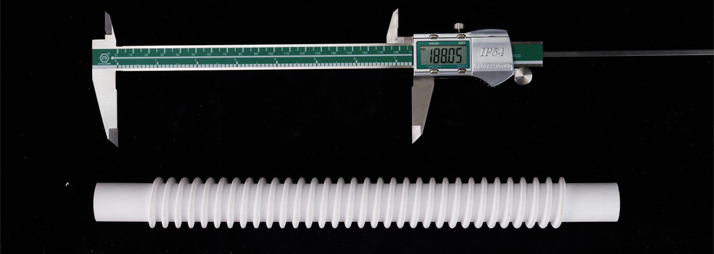
Yixing Minghao Special Ceramic Technology Co., Ltd.

02 Ceramic Forming

Ceramic powder is formed into a green body using molds and pressure. The forming process affects density, dimensional consistency, production efficiency and sintering deformation.

Dry Pressing Dry pressing fills free-flowing ceramic powder into a metal mold and compacts it under pressure. It is suitable for regular-shaped components with consistent dimensions and volume production needs. Careful control of powder filling, pressure, holding time and demolding improves green-body density and dimensional consistency.

Hot Pressing Hot pressing combines heat and pressure to form and densify ceramic materials. Heat improves particle bonding, while pressure reduces internal pores. This produces ceramic parts with higher density and a more uniform structure. The process is suitable for components requiring high density, strength, wear resistance or structural stability. Temperature, pressure, holding time and cooling must be controlled according to the material and product requirements.

Isostatic Pressing Isostatic pressing uniformly compresses ceramic powder in a flexible mold via pressurized liquid, yielding uniform density and fewer defects; it suits large, thick-walled, complex or high-performance ceramics, with powder, mold, pressure, hold time and release carefully controlled.
03 High-Temperature Sintering

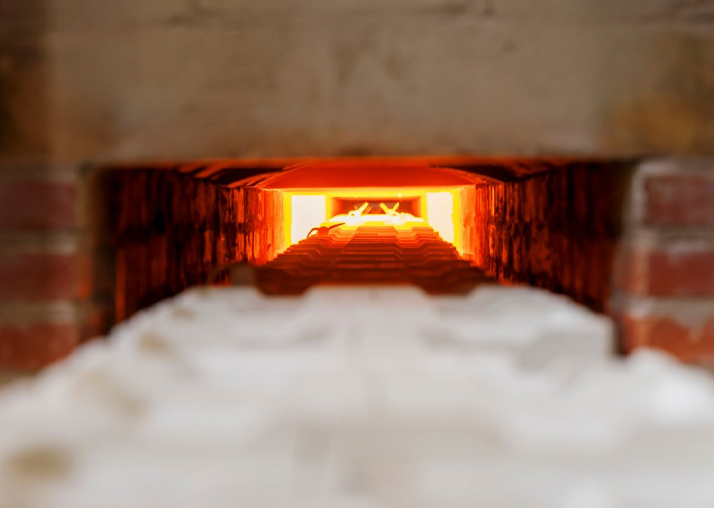
Sintering is a key step that determines the final properties of industrial ceramics. After forming, the green body has the required shape but limited strength. High-temperature sintering bonds the ceramic particles, increases density and strength, and develops the required hardness, insulation, wear resistance and thermal stability. Each ceramic material requires a suitable temperature profile, holding time and cooling process.

Sintering Shrinkage Control Ceramic parts shrink during sintering. The shrinkage rate depends on the material, powder condition, forming density, part structure and sintering conditions. Shrinkage allowance must be included in the mold and green-body design. Parts with uneven walls, large dimensions or complex structures may also require special placement and support to reduce deformation.

Yixing Minghao Special Ceramic Technology Co., Ltd.

04 CNC Machining

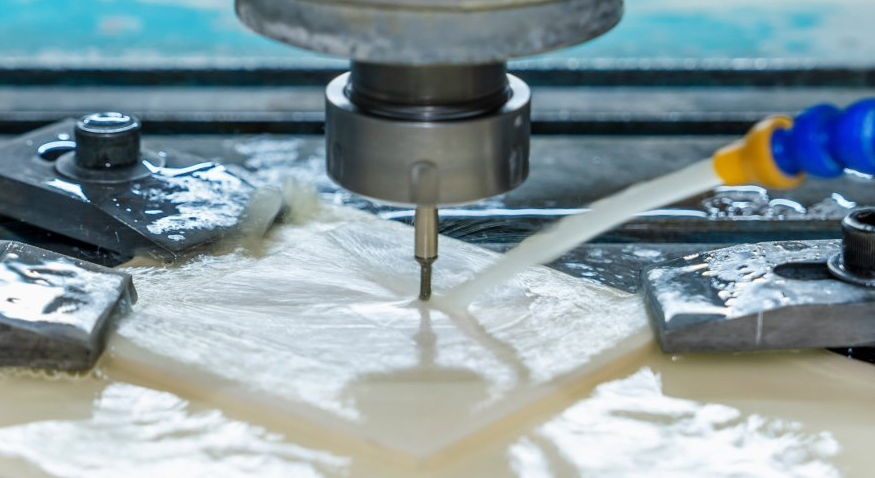
We operate eight CNC machines to support the machining of custom ceramic components. Sintered ceramics are hard and brittle. Holes, slots, steps, mating surfaces and other complex features often require precision machining. We select the machining method based on the material, structure and tolerance requirements while reducing chipping, cracking and material loss.

05 Precision Grinding

More than 10 surface grinders support the dimensional and surface finishing of custom ceramic parts. Precision grinding is commonly used for components with strict requirements for dimensions, tolerances, flatness or surface finish.

06 Inspection & Verification

Inspection covers dimensions, tolerances, appearance, surface quality, hole positions, structural features, deformation and cracks.

Process Selection

There is no single production route for industrial ceramic parts. Even with the same material, different shapes, quantities and tolerance requirements may require different process combinations.

  • Yixing Minghao Special Ceramic Technology Co., Ltd.

    Material

    Alumina, zirconia, steatite, mullite and cordierite have different forming, sintering and machining properties.
  • Yixing Minghao Special Ceramic Technology Co., Ltd.

    Geometry

    Wall thickness, hole diameter, deep holes, sharp corners, dimensional changes and internal features all affect process selection.
  • Yixing Minghao Special Ceramic Technology Co., Ltd.

    Tolerance

    General dimensions can often be controlled through forming and sintering. Critical dimensions usually require CNC machining or precision grinding.
  • Yixing Minghao Special Ceramic Technology Co., Ltd.

    Production Volume

    Prototypes, small batches and volume production require different tooling, processes and cost planning.
  • Yixing Minghao Special Ceramic Technology Co., Ltd.

    Application Requirements

    Operating temperature, electrical insulation, wear resistance, corrosion resistance, mechanical load and assembly method all affect material and process selection.